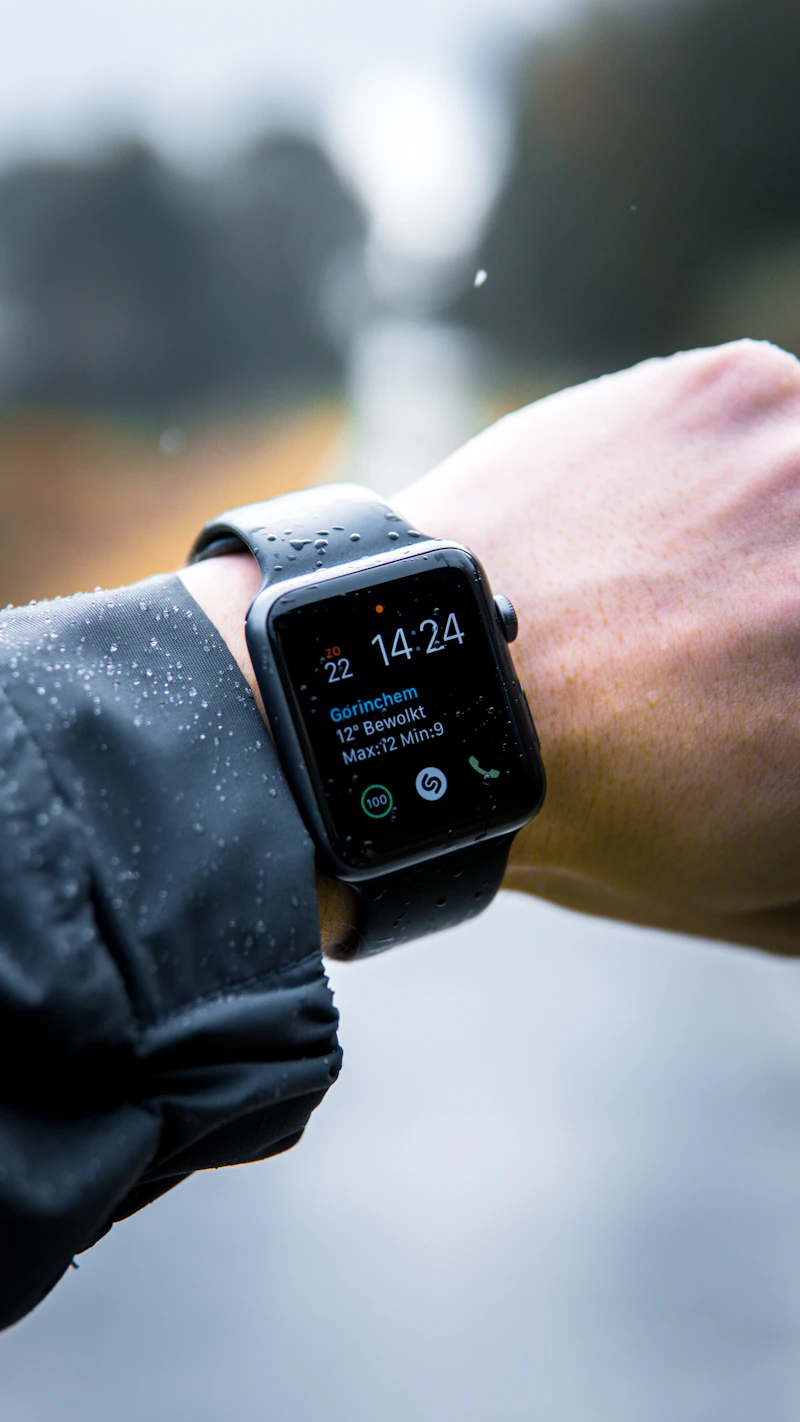
Garmin Forerunner 55 vs 155 Entry Level GPS Watch Comparison
Verdict up front: Garmin Forerunner 55 is the better value entry-level running watch for most beginners. Forerunner 155 adds structured training features that make it worth the extra spend only if you plan to follow coached or plan-based training from day one.
Verdict up front: Garmin Forerunner 55 is the better value entry-level running watch for most beginners. Forerunner 155 adds structured training features that make it worth the extra spend only if you plan to follow coached or plan-based training from day one.
Introduction: Which Entry-Level Garmin GPS Watch Is Right for You?
Choosing your first GPS running watch is one of those decisions that feels more complicated than it needs to be. Garmin's entry-level Forerunner lineup — anchored by the Forerunner 55 (AUD $299) and Forerunner 155 (AUD $399) — offers two genuinely capable, beginner-friendly running watches at price points that don't require a second mortgage.
Both watches track your runs accurately. Both integrate with Garmin Connect, one of the most comprehensive free running platforms available. Both fit on a wrist without looking like a GPS brick. But the $100 price gap between them reflects real differences in features — and whether those differences matter depends entirely on what kind of runner you are and what kind of runner you intend to become.
This Garmin Forerunner 55 vs 155 comparison is written for runners who are new to GPS watches, upgrading from a basic fitness tracker, or buying their first dedicated running watch. We tested both watches across 8 weeks of training ranging from easy 5km runs to structured interval sessions.
Overview: Garmin Forerunner 55
The Garmin Forerunner 55 launched to considerable praise as the most capable entry-level GPS watch Garmin had produced to that point. Its core value proposition is straightforward: accurate GPS tracking, clear run metrics, long battery life, and Garmin's trusted Connect platform — all in a lightweight, comfortable package at a price that doesn't exclude beginner runners.
What makes the FR55 notable is not what it adds over predecessors but how well it executes the fundamentals. GPS accuracy is reliable in everyday running environments. The interface is simple enough for genuine beginners. Heart rate monitoring from the wrist is accurate enough for zone-based training. And the suggested daily workouts feature — which provides adaptive training suggestions based on your current fitness and recovery — is something you'd expect to find on a much more expensive watch.
For runners whose training consists of regular runs at easy to moderate effort, occasional goal races (5km, 10km, half marathon), and general fitness tracking, the FR55 does everything they need.
Overview: Garmin Forerunner 155
The Garmin Forerunner 155 positions itself one step up in Garmin's entry-level hierarchy. It retains everything the FR55 offers and adds features specifically targeting runners who want to follow a structured training plan or work toward specific performance goals.
The headline additions over the FR55 are: training plan support (built-in downloadable plans for 5km through marathon), more detailed training load metrics, expanded activity profiles, and slightly more sophisticated performance analytics. It's aimed at runners who are serious about improvement — not just tracking, but actually following a programme.
Whether these additions justify the $100 premium is the central question of this comparison.
GPS and Tracking Accuracy
Both the Forerunner 55 and Forerunner 155 use Garmin's standard GPS with GLONASS support. Neither uses multi-band GPS (which is reserved for Garmin's mid-range and premium products like the Forerunner 255 and above).
In practical testing across road running, park running, and suburban streets, both watches performed similarly well. GPS tracks were clean, distance measurements were consistent with known course distances (within 0.5–1%), and the watches locked on to satellite signals within 15–30 seconds in open conditions.
In environments with GPS challenges — dense urban areas, heavy tree canopy, running through tunnels — both watches showed occasional inaccuracies typical of single-band GPS. Neither watch is designed for technical trail navigation or GPS-critical applications.
Pace accuracy during runs is reliable on both devices. Instantaneous pace can fluctuate under tree cover or in urban canyons, but average pace and distance over a typical run are trustworthy.
GPS winner: Draw — identical hardware performance.
Heart Rate Monitoring
Both watches use Garmin's Elevate optical heart rate sensor on the wrist. The sensor performs adequately for steady-state and easy running — sufficient for monitoring general effort, staying within a training zone, and tracking heart rate trends over time.
At higher intensities — interval training, hill sprints, and fast-finish runs — wrist-based optical heart rate lags behind actual heart rate more noticeably. This is a limitation of optical wrist HR technology generally, not specific to these Garmin models. Runners who want precise heart rate data for interval training are better served pairing either watch with a chest strap (Garmin HRM-Dual, AUD ~$89).
Both watches display live heart rate during runs, track resting heart rate through the day, and calculate heart rate zones based on either age-estimated or custom-set maximums. The data is functionally identical across both models.
Key Feature Differences
This is the core of the comparison — where the $100 price gap lives.
Garmin Forerunner 55 Key Features
- Suggested Daily Workouts: Adaptive workout suggestions based on current fitness and recovery (run, walk, rest). This is a genuine highlight — an AI-guided training suggestion system that adjusts to your state rather than a fixed plan.
- Basic training metrics: Distance, pace, heart rate, cadence (with accessory), GPS track
- Safety features: LiveTrack (shares your live location with contacts), Incident Detection
- Garmin Connect integration: Full platform access, history, insights
- Music control: Controls phone playback (no onboard music storage)
- Battery: 2 weeks smartwatch mode, 20 hours GPS mode
Garmin Forerunner 155 Additional Features
- Structured workout support: Download and follow specific workouts (intervals, tempo runs, long runs with targets) with on-watch guidance during the session
- Garmin Coach training plans: Access to free adaptive training plans from Garmin Coach for 5km, 10km, and half marathon — plans adapt to your performance as training progresses
- PacePro: Create a pacing strategy for a goal race and follow it on watch during the event
- Training load and effect metrics: More detailed feedback on aerobic/anaerobic training load balance
- ClimbPro: Real-time elevation data during climbs (more relevant for trail runners)
- Battery: 2 weeks smartwatch mode, 20 hours GPS mode (identical to FR55)
The FR155's additions are specifically valuable for runners following a structured programme. If you download a marathon training plan and want your watch to guide you through specific sessions with real-time coaching cues — "speed up, you're 10 seconds per km too slow" — the FR155 delivers this. The FR55 does not.
Training and Performance Analytics
Forerunner 55
Post-run analytics available on the FR55 through Garmin Connect include: time, distance, average pace, heart rate zones, cadence (with accessory), elevation (GPS-estimated), and training load. Suggested Daily Workouts provides day-to-day training guidance.
The Fitness Age and VO2 Max estimate features are present on the FR55 — Garmin's watch-estimated aerobic fitness metric. These are useful for tracking long-term fitness trends even if the absolute values should be treated as estimates rather than clinical measures.
Forerunner 155
The FR155 adds Training Load Focus — a breakdown showing whether your recent training has been building aerobic base, lactate threshold, or speed — and provides directional guidance on where to focus next. It also integrates with Garmin Coach plans, which are adaptive: if you run faster or slower than plan targets consistently, the plan adjusts future sessions.
PacePro is a standout FR155 feature for goal-race runners. You input a target finish time for a specific course, and PacePro generates a kilometre-by-kilometre pacing strategy that accounts for elevation changes. During the race, the watch shows you whether you're ahead or behind that strategy in real time. For runners targeting a specific time goal at a goal race, this is genuinely useful — not gimmicky.
Analytics winner: Forerunner 155 — meaningfully for structured training users.
Design and Wearability
Both watches are designed to be genuinely wearable as everyday watches — not just running accessories. The size (42mm case), weight (~32g), and clean aesthetic make both watches appropriate for daily wear at work, social settings, and exercise.
The colour options are similar across both models. The silicone bands are comfortable, sweat-resistant, and interchangeable with standard 20mm bands for those who want aftermarket options.
The display is a transflective MIP (Memory in Pixel) type on both — excellent for outdoor use in Australian sun, readable without backlighting in daylight, and visible from running pace without squinting. Battery performance is unaffected by display-on time (unlike AMOLED displays on some competitors), which is a practical advantage for long runs.
Both watches have 5 ATM water resistance — safe for rain, swimming, and washing without removal.
Design winner: Draw — identical form factor and wearability.
Battery Life Comparison
| Mode | Forerunner 55 | Forerunner 155 |
|---|---|---|
| Smartwatch | 2 weeks | 2 weeks |
| GPS mode | 20 hours | 20 hours |
| GPS + HR | 20 hours | 20 hours |
Battery life is identical across both models. Twenty hours of GPS runtime comfortably covers a marathon (most finish in under 6 hours), a long training week, and several days of tracking without charging.
For ultramarathon runners or very long events exceeding 20 hours, both watches will require mid-race charging — a limitation that applies equally to both and is inherent in the entry-level product tier.
Garmin Connect and Ecosystem
Both watches integrate fully with Garmin Connect, which provides detailed post-run analysis, historical tracking, community challenges, course creation, and integration with Strava, Training Peaks, and other third-party apps.
Garmin Connect is genuinely one of the best free running platforms available. The depth of historical analysis, the training insights, and the platform's stability and reliability are advantages that cheaper watch brands with inferior apps can't match.
Both watches also support Garmin Pay (contactless payment at Australian payWave terminals) and smartphone notification mirroring (calls, texts, app alerts from iPhone or Android).
Price and Value Analysis
| Product | Price (AUD) | Best For |
|---|---|---|
| Garmin Forerunner 55 | $299 | Casual runners, beginners, fitness trackers |
| Garmin Forerunner 155 | $399 | Structured training, goal-race preparation, coached runners |
The $100 gap is real and the features behind it are real. The question is whether you'll use them.
Buy the FR55 if you want a reliable GPS running watch that accurately tracks your runs, gives you daily workout suggestions, and integrates with Garmin Connect — without needing your watch to guide you through specific interval sessions. For the majority of recreational runners, the FR55 is the rational choice.
Buy the FR155 if you are committed to following a structured training plan, targeting a specific race time, or want your watch to coach you through individual sessions with real-time guidance. The $100 premium pays for Garmin Coach, PacePro, and structured workout guidance — features that deliver real training value if you actually use them.
Who Should Buy Which
Buy Garmin Forerunner 55 if:
- You're new to GPS running watches
- You run primarily for fitness, health, or casual goal-setting
- Your training is self-directed rather than plan-based
- The $100 saving is meaningful to your kit budget
- You want the best-value entry-level Garmin available
Buy Garmin Forerunner 155 if:
- You're training for a specific race with a time goal
- You want a structured training plan on your watch (Garmin Coach)
- PacePro race-day pacing strategy appeals to your goal-race preparation
- You're willing to pay for features you'll actually use
- You anticipate moving into more structured training within the next year
Final Verdict
The Garmin Forerunner 55 remains one of the best value GPS running watches available in Australia in 2026. It does the core job — tracking your runs accurately, monitoring your health, and integrating with a world-class platform — without unnecessary complexity or inflated pricing.
The Garmin Forerunner 155 earns its premium for runners who will genuinely use structured training features. Garmin Coach, PacePro, and Training Load Focus are not marketing fluff — they're practical tools for runners working toward specific goals. If that's you, the $100 is well spent.
For most entry-level running watch buyers, the FR55 is the better starting point. Move up to the FR155 — or skip directly to the Forerunner 255 — when your training demands it.
Overall Ratings:
- Garmin Forerunner 55: ★★★★½ (4.5/5)
- Garmin Forerunner 155: ★★★★★ (5/5 — for structured training users)
Prices correct as of June 2026. Available at Garmin Australia, rebel sport, JB Hi-Fi, and major sports retailers.