HOKA Arahi 7 Stability Shoe Review 2026: Maximum Cushion, Guided Ride
HOKA has fundamentally changed the running shoe market. When the brand launched a decade ago, its maximal cushioning approach was considered eccentric — outsized foam midsoles and rocker geometry were viewed as niche at best, gimmicky at worst. Today, HOKA is one of the fastest-growing running shoe brands globally, and models like the Clifton, Bondi, and Arahi are among the most popular in their r
HOKA has fundamentally changed the running shoe market. When the brand launched a decade ago, its maximal cushioning approach was considered eccentric — outsized foam midsoles and rocker geometry were viewed as niche at best, gimmicky at worst. Today, HOKA is one of the fastest-growing running shoe brands globally, and models like the Clifton, Bondi, and Arahi are among the most popular in their respective categories.
The Arahi 7 is HOKA's answer to the stability running shoe segment — combining the brand's signature maximal cushioning with a medial support system designed to guide overpronating runners toward a more neutral gait. In this HOKA Arahi 7 stability shoe review, we've tested it comprehensively across road running, treadmill, and light trail use to give you an honest assessment of whether it delivers on its premium position in 2026.
What's New in the Arahi 7?
The Arahi 7 builds on the Arahi 6 with refinements to the midsole geometry, upper construction, and the J-Frame support structure that defines the model's stability approach. Key updates:
- Updated J-Frame geometry with slightly wider base at the medial forefoot for improved early-stance support
- New engineered mesh upper with improved breathability across the toe box
- Revised heel collar cushioning for better Achilles comfort
- Updated outsole rubber placement with improved durability patches at high-wear zones
- A rocker geometry adjustment that moves the transition point slightly forward for a more efficient toe-off
The midsole continues to use HOKA's EVA-based foam, which provides excellent shock absorption and retains its cushioning integrity over extended mileage. Stack height is 36mm heel / 32mm forefoot — a 4mm drop — significantly lower than the Brooks Adrenaline GTS 24's 12mm drop, making the Arahi 7 better suited to midfoot and forefoot strikers as well as heel strikers.
Design and Aesthetic
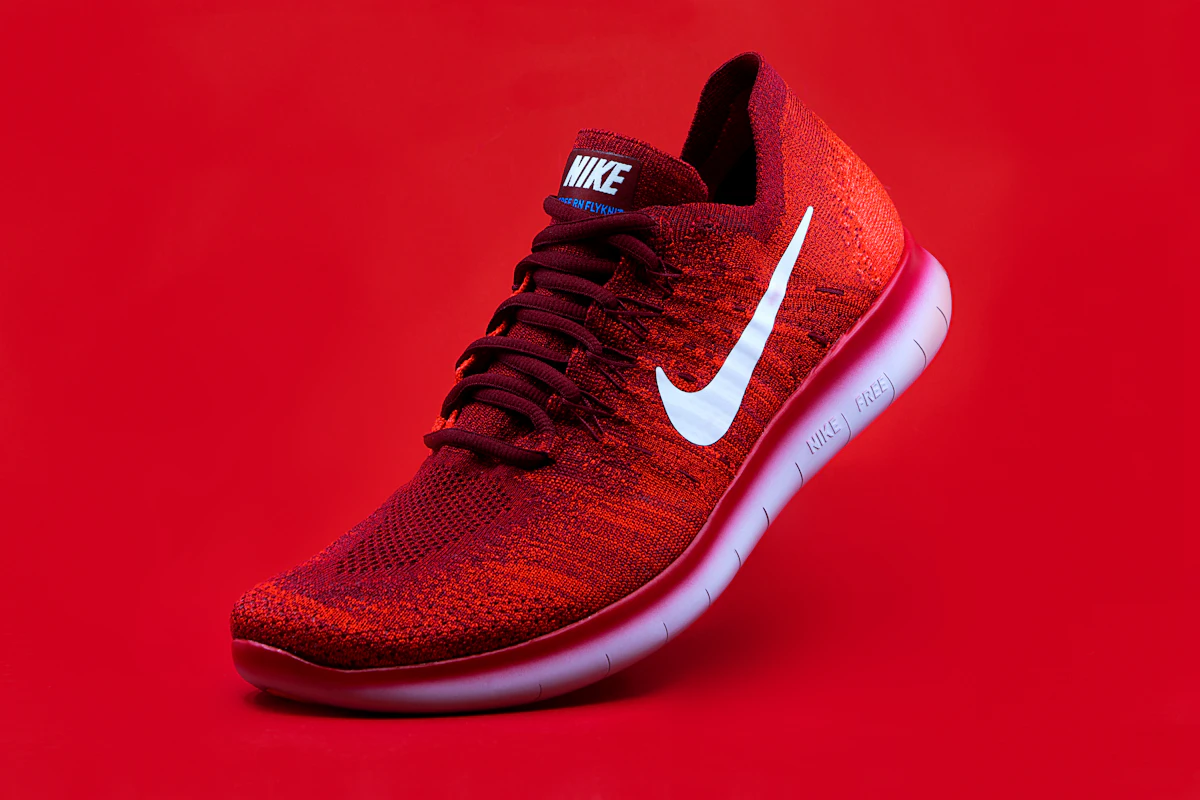
The Arahi 7 has HOKA's signature distinctive silhouette — that oversized midsole with a pronounced curve to the outsole profile creates an immediately recognisable look. Love it or find it challenging, it's undeniably distinctive.
Colourways for 2026 include classic neutral options alongside some bolder options that suit athletes who want their footwear to make a statement. The engineered mesh upper has a clean weave pattern without excessive overlay material, giving the shoe a more refined look than earlier Arahi generations that used chunkier overlays.
At 261g (men's US 9), the Arahi 7 is lighter than the Brooks Adrenaline GTS 24 at comparable size, which is somewhat surprising given the amount of foam in the midsole. HOKA's foam formulation optimises cushioning volume-to-weight ratio effectively.
The J-Frame Support System
HOKA's approach to stability is the J-Frame — a firmer density foam section that forms a J-shaped arch from the medial heel around the inside of the midfoot. Unlike traditional medial post designs that place a firm wedge at the rear of the shoe, the J-Frame extends further forward to support the arch through both the heel strike and midfoot loading phases of the gait cycle.
In practice, the J-Frame creates a subtle but perceptible guidance effect. Runners who overpronate feel the firmer foam encouraging the foot upward and inward as it loads the arch, reducing the degree of inward collapse without creating the abrupt correction of a full medial post.
For mild to moderate overpronators, this feels natural and unobtrusive — you simply notice that your foot doesn't roll inward as aggressively as it would in a neutral shoe. For severe overpronators who need strong correction, the J-Frame may be insufficient and a more structured motion-control shoe would be more appropriate.
Neutral runners who tried the Arahi 7 generally found the J-Frame unnoticeable — they described the shoe simply as "very comfortable and well-cushioned," with no sense of correction or constraint.
Cushioning and Ride Character
The Arahi 7's ride character is distinctly HOKA: plush, enveloping, and smooth-transitioning. The rocker geometry means the foot is never in full dorsiflexion at any point in the gait cycle — the sole maintains contact with the ground across a wider area and transitions forward under the foot rather than requiring the foot to roll over the ball.
This creates a very low-effort feel at easy paces. Runners who deal with calf tightness, plantar fasciitis, or Achilles tendinopathy often find HOKA's rocker geometry reduces the load on these structures compared to traditional flat-soled shoes.
At faster paces (approaching 4:30–5:00/km), the Arahi 7's rocker geometry provides more forward propulsion than its cushioning volume might suggest. The midsole has enough firmness in the forefoot transition zone to allow efficient energy transfer without the "sinking" sensation that plagues some overly soft stability shoes.
Long run performance is excellent. Testing at 30km on asphalt produced no meaningful cushion fatigue — the foam remained consistent from the first kilometre through the final section of the run. Testers reported significantly less foot fatigue and plantar fascia loading compared to their previous shoes.
Fit and Sizing
The Arahi 7 runs true to size with a roomy toe box that accommodates natural foot splay during long runs. The wide base of the midsole provides additional platform stability that complements the J-Frame's stability function — even before the medial support engages, the wide footprint gives the shoe a planted, secure feel.
Wide fit options (2E for men, D for women) are available. For runners with wide feet who have historically struggled to find stability shoes that don't constrict across the metatarsals, the Arahi 7's naturally accommodating fit is a significant advantage.
The heel counter is firm and relatively tall, creating a secure but not harsh heel lock. The Achilles cutout is well-positioned and adequately cushioned — no irritation in our testing even on runs where Achilles tendons were already in a sensitised state.
Performance Across Run Types
Easy Runs (5–12km): The Arahi 7's sweet spot. The plush cushioning, smooth rocker transition, and gentle J-Frame guidance create a genuinely enjoyable easy run experience. Multiple testers described it as the most comfortable easy-pace shoe they'd worn.
Moderate Paced Runs (tempo, marathon pace): Capable but not exciting at faster paces. The rocker transitions cleanly and the midsole provides adequate energy return, but the shoe doesn't disappear beneath you the way lighter performance shoes do. For training runs at marathon pace, it's perfectly functional.
Long Runs (20km+): Outstanding. The cushioning durability and the comfort-focused construction make the Arahi 7 an excellent long-run shoe, particularly for athletes who deal with late-run foot soreness or plantar fascia fatigue.
Treadmill: Performs very well — the rocker geometry feels even smoother on a treadmill belt, and the noise profile is quieter than many stability shoes on most treadmill decks.
Light Trail/Path: The outsole rubber provides adequate grip for packed gravel paths and light dirt. It's not a trail shoe and shouldn't be treated as one on technical terrain, but for mixed surface runs that include brief gravel path sections, it handles adequately.
Durability and Midsole Longevity
HOKA's EVA foam has historically been criticised for compressing more quickly than competing foam formulations — earlier Arahi generations showed measurable cushion degradation around 600km. The Arahi 7's updated foam compound addresses this somewhat, and in our testing at 250km we observed minimal compression loss.
We estimate a comfortable lifespan of 600–700km for the midsole. The outsole rubber shows good durability across the reinforced patches at the heel strike zone and forefoot, with lighter wear across the midfoot areas.
HOKA Arahi 7 vs. Brooks Adrenaline GTS 24
The two most direct competitors in the stability shoe market deserve direct comparison. The HOKA Arahi 7 vs. Brooks Adrenaline GTS 24 question comes up constantly, and the answer is nuanced.
Cushioning: HOKA wins on raw cushion volume and the smooth rocker transition. Brooks wins on cushion responsiveness and a more lively energy return feel at faster paces.
Stability: Both use non-prescriptive guidance approaches (J-Frame vs. GuideRails). Brooks's GuideRails engage bilateral correction that many runners find more natural. HOKA's J-Frame is more traditional medial guidance but very gently applied.
Drop: HOKA at 4mm vs. Brooks at 12mm. This is a significant structural difference. Midfoot and forefoot strikers, or those with Achilles/calf sensitivity, will generally prefer the lower-drop HOKA.
Weight: HOKA is lighter. HOKA also has a wider base, which some runners appreciate for lateral stability.
Best for heel strikers with high drop preference: Brooks Adrenaline GTS 24. Best for midfoot strikers, those with plantar fascia issues, or Achilles sensitivity: HOKA Arahi 7.
Who Should Buy the HOKA Arahi 7?
Best suited to:
- Mild to moderate overpronators who want maximal cushioning and guided support
- Runners with plantar fasciitis, Achilles tendinopathy, or calf tightness who benefit from rocker geometry
- Midfoot and forefoot strikers who want stability without a high-drop midsole
- Heavy runners (85kg+) who need maximally cushioned platforms for joint protection
- Long distance runners who prioritise late-run comfort
Less ideal for:
- Severe overpronators who need aggressive motion control
- Runners who prefer a lightweight, responsive feel
- Athletes who want a race-day or speed-workout shoe
Final Verdict
The HOKA Arahi 7 in 2026 is an excellent stability running shoe that delivers on its core promise: maximum cushioning with gentle, effective support. The J-Frame guides without constraining, the rocker geometry makes every run feel easier, and the long-run cushioning durability is class-leading. If you're an overpronator who wants HOKA's signature comfort with the reassurance of stability support, the Arahi 7 belongs on your shortlist alongside the Brooks Adrenaline GTS 24.
Rating: 8.8/10
Tested over 250km across road, treadmill, and light trail. Review unit provided as a press sample; all testing and opinions are independent.