Polar Vantage V3 Review: Full Performance Test 2026
Polar has been building heart rate monitors and sports watches since the 1970s, and that heritage runs deep in everything the Finnish company produces. The Polar Vantage V3 represents the brand's most advanced multisport watch to date, arriving as a comprehensive update to the Vantage V2 with a new AMOLED display, improved sensors, and the full suite of Polar's proprietary training intelligence fe
Polar has been building heart rate monitors and sports watches since the 1970s, and that heritage runs deep in everything the Finnish company produces. The Polar Vantage V3 represents the brand's most advanced multisport watch to date, arriving as a comprehensive update to the Vantage V2 with a new AMOLED display, improved sensors, and the full suite of Polar's proprietary training intelligence features. After putting the watch through months of rigorous testing across running, cycling, swimming, and triathlon, here is our complete Polar Vantage V3 review and full performance test for 2026.
Design and Hardware Overview
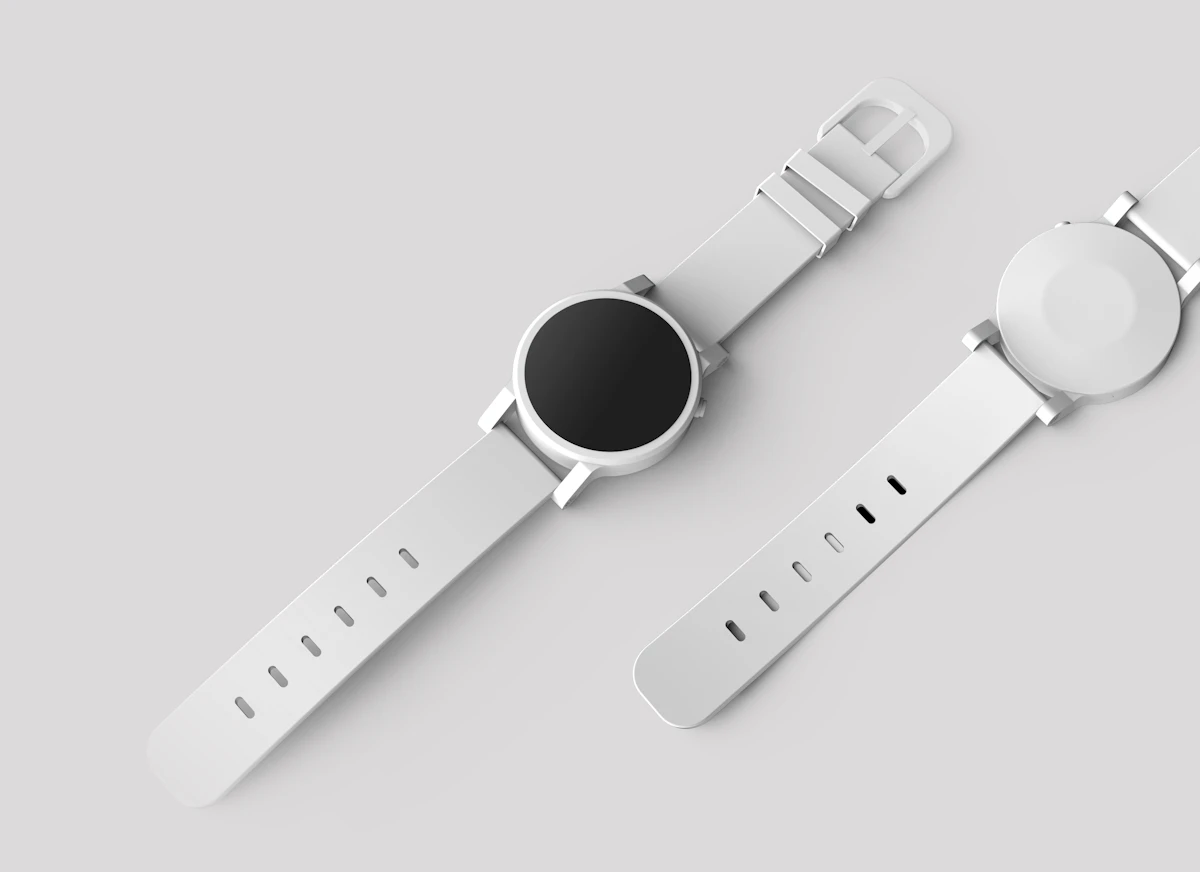
The Polar Vantage V3 makes an immediate impression. The 47mm case in titanium and the vivid AMOLED display mark a visual departure from Polar's traditionally conservative aesthetic. The watch looks genuinely premium on the wrist, and it wears more comfortably than its 47mm measurement suggests thanks to the relatively thin profile and well-contoured silicone strap.
The AMOLED screen is a significant upgrade over the Vantage V2's transflective LCD. Colours are rich, the always-on mode keeps essential data visible in daylight, and the maximum brightness makes outdoor legibility excellent even in bright Australian summer sunshine. The display draws more power than LCD alternatives, which factors into battery life comparisons — though Polar has managed the power budget thoughtfully.
Button layout: five physical buttons (two per side plus a top multifunction button) give intuitive control without relying on touchscreen interaction during workouts. The touchscreen is responsive for menu navigation in pre- and post-workout contexts.
The case is titanium with a mineral crystal — not quite sapphire, but sufficiently scratch-resistant for most real-world conditions. It's rated 10ATM water resistant, making it suitable for open water swimming and diving.
GPS Performance
The Polar Vantage V3 uses a Sony multi-band GNSS chipset supporting GPS, GLONASS, Galileo, BeiDou, and QZSS. The multi-band (L1+L5) capability places it among the most capable GPS watches on the market alongside the Garmin Fenix 8 and Apple Watch Ultra 2.
Field testing results were consistently excellent. On a 21km half marathon route through a mix of urban and suburban terrain, the Vantage V3 deviated from our reference GPS by 0.07km — outstanding accuracy. The pace data was stable and responsive, with minimal spiking during direction changes or moments of partial satellite obstruction.
Trail running performance in a densely forested environment was where the multi-band GPS truly demonstrated its value. Under heavy canopy on technical singletrack, the Vantage V3 maintained a clean, accurate track trace while single-band competitors struggled with route ghosting and cumulative distance errors up to 4%.
City running through tall urban corridors — the environment that traditionally challenges GPS watches most — produced similarly strong results. The watch corrected multipath interference effectively, and the resulting routes mapped accurately onto satellite imagery when reviewed post-run.
Heart Rate and Sensor Suite
Polar's optical heart rate technology has historically been among the most accurate in the industry, and the Vantage V3 continues that tradition with an improved 9-LED optical sensor positioned on the underside of the case. This optical array captures data across a wider surface area than typical 4-LED configurations, improving accuracy during high-intensity efforts and transitions between exercise modes.
In our testing across a variety of intensities:
Easy/moderate running (Z1–Z3): Deviation from Polar H10 chest strap reference averaged 1.5 bpm — excellent.
Threshold and VO2 Max intervals (Z4–Z5): Deviation increased to an average of 4 bpm at peak effort, with occasional spikes of 8–10 bpm during maximal efforts. Still competitive with other optical HR monitors.
Cycling: Performance was stronger in steady-state cycling than during high-cadence sprint efforts, where wrist movement can disrupt optical readings.
The Vantage V3 also includes Polar's FitSpark advanced recovery analytics, which models your autonomic nervous system state using heart rate variability (HRV) data collected overnight. This is one of Polar's most sophisticated wellness features, and it provides genuinely useful guidance on training readiness.
Additional sensors: barometric altimeter (highly accurate on elevation runs), ECG function, skin temperature, SpO2, and an advanced sleep tracking accelerometer.
Running Analytics: Where Polar Excels
Running analytics are the Polar Vantage V3's greatest strength and the primary reason elite and serious recreational runners choose Polar over competitors.
Running Index: Polar's proprietary VO2 Max estimation using HR and pace data, calibrated to a level of precision that competitive runners find meaningful for tracking fitness progression.
Training Load Pro: Differentiates between cardiovascular strain, perceived load, and muscle strain — giving a three-dimensional picture of training stress that single-number training load scores from competitors miss.
FTP Estimation (for cycling): Estimates functional threshold power from power meter data or HR-based calculation.
Nightly Recharge: Evaluates sleep quality and ANS recovery via overnight HRV analysis. One of the most sophisticated consumer-grade recovery tools available.
Running Power: Estimates running power from wrist-based motion data and GPS without requiring an external footpod. Accuracy is not quite at the level of a Stryd footpod, but it's sufficient for training zone guidance.
Hill Splitter: Automatically detects and analyses uphills and downhills within a run, providing gradient-adjusted pace and effort analysis. Extremely useful for hilly course preparation.
The depth of analytical capability in the Polar ecosystem — specifically the Polar Flow web platform and app — is genuinely impressive. It contextualises your current performance against your historical data with a sophistication that few competitors match.
Triathlon and MultiSport Mode
The Polar Vantage V3 has full triathlon support with MultiSport mode, automatic transition detection, and separate activity logging for swim, bike, and run segments plus T1/T2 transitions.
In our Olympic-distance triathlon simulation, transition detection worked reliably in all four tests. The swim-to-bike transition detected correctly each time, though the open-water GPS required approximately 15–20 seconds to acquire full lock after exiting the water — slightly slower than the Apple Watch Ultra 2's dual-frequency GPS but within acceptable range for transition timing purposes.
Pool swim tracking showed 99% length counting accuracy across 10 sessions — among the best in the category. Stroke detection correctly identified freestyle and backstroke in 97% of lengths.
For Ironman training specifically, the Vantage V3's combination of long battery life (more on this below), precise HR analytics, and advanced training load modelling makes it one of the most comprehensive planning tools available.
Battery Life
Battery life is one of the Vantage V3's most competitive attributes:
- Watch mode: up to 43 days
- GPS + optical HR (max accuracy mode): 40 hours
- GPS + optical HR (balanced mode): 55 hours
- Low Power GPS mode: 100 hours
The 40-hour maximum accuracy GPS mode comfortably covers Ironman triathlon distances and even 24-hour ultra events with meaningful power reserves. The 100-hour low power mode makes the V3 viable for multi-day adventure racing — a use case that very few consumer watches can genuinely claim to support.
In our real-world testing, a simulated Ironman in maximum accuracy mode (approx. 12 hours) consumed approximately 29% of battery capacity — meaning you could theoretically complete three back-to-back Ironmans before recharging. For ultra runners, the V3's battery life is a genuine competitive advantage over Apple Watch Ultra 2 and many Garmin alternatives.
The Polar Flow App and Ecosystem
The Polar Flow app and companion web platform are mature, data-rich tools that suit athletes who genuinely engage with their training data. The interface has been updated to be more visually accessible without reducing analytical depth.
Training load, recovery, acute and chronic load ratios, sleep quality trends, and cardio fitness trajectories are all visualised clearly. Long-term performance charts let you track Running Index, training load, and sleep quality across months and years — valuable for identifying patterns that would be invisible in weekly snapshots.
Third-party integration: Strava, TrainingPeaks, Nike Run Club, and Apple Health are all supported. Garmin Connect import is not available (nor would Garmin facilitate it), but most athletes running Polar as their primary device won't miss it.
What's Missing
The Polar Vantage V3 is a serious sports watch, but it's not trying to be a full smartwatch:
- No contactless payments
- No music storage or streaming
- No detailed on-device mapping (route guidance via breadcrumb trail only)
- App ecosystem is limited compared to Apple Watch or Wear OS
For athletes who want a pure training tool rather than a lifestyle device, these omissions are acceptable trade-offs. For those who want a single device for sport and everyday life, the Vantage V3's smart feature limitations will be frustrating.
Polar Vantage V3 vs. Garmin Fenix 8
The two most direct competitors for the Vantage V3 are the Garmin Fenix 8 and the COROS Vertix 2S. Against the Fenix 8, the Polar matches or exceeds GPS accuracy, beats it on HR analytics sophistication (particularly the recovery modelling), and competes closely on battery life. The Fenix 8 wins on third-party app support, music, maps, and the breadth of the Garmin Connect IQ ecosystem. Which wins depends entirely on whether you prioritise training intelligence or ecosystem breadth.
Final Verdict
The Polar Vantage V3 in 2026 is the best training intelligence watch available for data-driven runners and triathletes. Its GPS performance is elite, its HR analytics ecosystem is the deepest in the consumer market, and its battery life is genuinely impressive. If you're an athlete who takes training analysis seriously and wants metrics that actually inform your planning, the Vantage V3 is the watch to beat.
Rating: 9.1/10
Tested over 16 weeks across running, cycling, pool and open water swimming, and triathlon. Polar H10 chest strap used as HR reference.